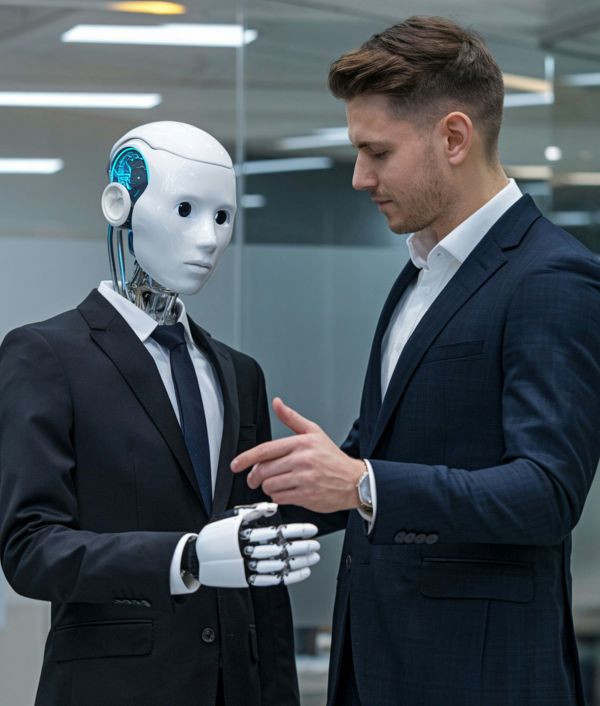
There has been a growing wave of sensational news suggesting that artificial intelligence is taking over jobs and making human workers irrelevant. Almost every day, headlines claim that people are losing their jobs because companies are adopting AI or that graduates may no longer need university degrees because machines will replace them anyway. Whenever I read these stories, I find myself questioning whether AI is truly the problem or whether we are overlooking something much bigger.
As someone who has researched and worked around AI technologies, I strongly believe that AI is simply a tool. It does not operate by magic, nor can it function independently without human input. AI systems are built, trained, monitored, and maintained by people. Without humans, AI has no direction, purpose, or accountability. The idea that AI can fully replace humans ignores the reality of how these technologies actually work.
AI AS A PRODUCTIVITY TOOL, NOT A HUMAN REPLACEMENT
AI has the ability to improve productivity and efficiency across many industries. It can automate repetitive tasks, analyse large amounts of data, and help organisations scale their operations. However, this does not mean humans are no longer needed. On the contrary, AI increases the demand for people who understand how to use these tools responsibly and effectively.
In many industries, especially those involving security, sensitive data, ethics, and decision-making, human involvement remains essential. Even when AI is used, organisations still rely on people to supervise systems, interpret results, and take responsibility for outcomes. While it may be argued that some companies might require fewer employees after adopting AI, this largely depends on the nature of the job and the industry itself. AI changes how work is done, but it does not eliminate the need for human intelligence, judgment, and creativity.
READ ALSO : THE BEST WAY TO USE GENERATIVE AI
THE UNSPOKEN REALITY: THE WORLD IS STILL RECOVERING FROM COVID-19
What is often missing from the AI job-loss conversation is the long-term economic impact of the COVID-19 pandemic. The truth is that the global economy has not fully recovered. Even five years after the pandemic, governments, businesses, and individuals are still struggling to regain stability. Inflation has continued to rise in many countries, increasing the cost of living and placing enormous pressure on both employers and employees.
Many businesses are shutting down not because of AI, but because they are still dealing with the financial damage caused by the pandemic. Small and medium-sized enterprises, in particular, have found it difficult to survive in an environment of rising costs and reduced consumer spending. High-street shops and local businesses are closing every day, and these closures have nothing to do with artificial intelligence. AI is not responsible for producing or selling everyday goods in supermarkets, yet these businesses are still struggling.
SENSATIONAL NEWS AND CULTURE OF FEAR
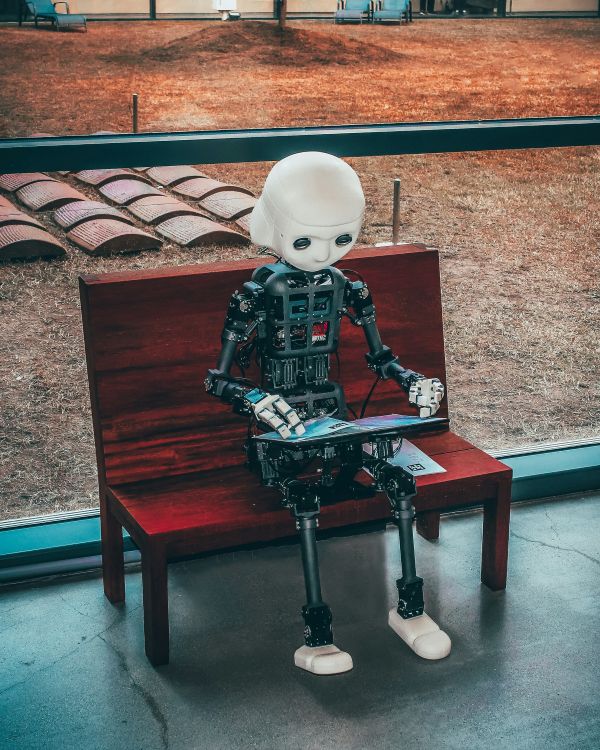
Instead of addressing these deeper economic challenges, sensational headlines often shift the blame to AI. This creates unnecessary fear and misinformation. People begin to believe that humans are becoming useless or that there is no point in building careers anymore. I have seen students openly question whether they should even pursue higher education because they believe AI will replace them anyway.
This kind of thinking is dangerous. It distracts us from the real issues and discourages people from investing in their education and skills. The truth is that knowledge, adaptability, and critical thinking are more important than ever. AI does not remove the need for education; it changes the type of skills that are valuable in the modern workforce.
GLOBAL EVENTS AND THEIR ECONOMIC IMPACT
Beyond COVID-19, other global events have also contributed significantly to today’s economic challenges. The war between Russia and Ukraine has had widespread consequences, particularly for Western countries with trade and economic ties to the region. Disrupted supply chains, rising energy costs, and lost trade opportunities have further weakened economies already struggling to recover from the pandemic.
When these factors are considered together, it becomes clear that unemployment and business closures cannot be blamed on AI alone. The economic pressures facing the world today are the result of multiple interconnected crises, not a single technological advancement.
CHANGING THE NARRATIVE AROUND AI AND WORK
Instead of using fear-based narratives, we need to have more honest and balanced conversations. The focus should be on how we can tackle inflation, support struggling businesses, create sustainable employment, and help workers adapt to change. AI should be viewed as part of the solution, not a convenient scapegoat.
Humans are not being replaced; the nature of work is evolving. Those who learn, adapt, and understand how to work alongside technology will continue to be valuable. The real challenge lies in addressing economic recovery, policy decisions, and global stability rather than spreading panic about machines taking over.
FINAL THOUGHTS
AI is not the enemy. It is a powerful tool that can enhance productivity and innovation when used responsibly. The real issues we need to confront are the lingering effects of COVID-19, rising inflation, global conflicts, and economic uncertainty. If we want meaningful solutions, we must move beyond sensational headlines and focus on understanding what is truly happening around the world.
That is the conversation we should be having.

Hi, I’m Dr. Mobolanle Bello, a Computer Science Lecturer with over 15 years of experience in software engineering, web development, data science, database management, ebusiness, research, and education. My expertise includes creating bespoke digital solutions such as e-learning platforms and e-commerce sites, alongside conducting research in AI, machine learning, and network optimisation. I have published my work in respected journals and conferences, contributing to advancements in technology. Outside of academia, I am passionate about using technology to improve lives and am committed to inspiring the next generation of tech professionals through teaching and collaboration.